15-16 April 2026 Astana, Kazakhstan

KEY TOPICS AND THEMES

The Forum agenda is devised using two principal criteria:

Topic Ratings

Sessions are selected based on the highest ratings from participants and the program committee.

Submissions:

The volume and quality of proposed presentations for each topic is a key factor in theme selection.

Given these constraints, only topics receiving the highest ratings and the largest number of speaker submissions will feature in the final agenda.

“Speaker applications are accepted until 1 March.”

Apply to present here

CHALLENGES, TRENDS, KEY QUESTIONS

1. Global Context and Kazakhstan’s Position

The sector’s development is shaped by three powerful global dynamics:

  • Demographics and Demand: The growth of urban populations and the middle class ensure sustained long-term demand for mineral resources.
  • Energy Transition: Low-carbon technologies are dramatically intensifying the need for copper, lithium, and rare earth metals.
  • Geopolitical Volatility: Trade barriers and local conflicts are reshaping supply chains, compelling consumers to seek stable, alternative sources.

Globally, the mining and metallurgical industry is experiencing accelerated cost inflation-driven by rising expenditures on energy and labour. Tax burdens in some areas now match or exceed global averages, prompting both business and government to seek equilibrium between fiscal aims and investment appeal.

2. Kazakhstan’s Subsoil Use Reform: Priority Rights and Digitalisation

Late 2025 brought sweeping legislative changes in Kazakhstan, aimed at robust digitalisation and attracting major partners:

  • Priority Rights for Strategic Investors: Investors launching large-scale projects (>50 billion tenge) have been granted the right to acquire sites outside traditional auction processes, shortening the investment cycle that globally can stretch up to 18 years from discovery to extraction.
  • Unified Digital Infrastructure: State digital platforms are now legally recognised as the primary tools for managing subsoil use, integrating geological data and government services in a single-window format.
  • National Geological Information Operator: The state service is now a centralized data custodian, precluding privatization and preventing fragmentation of geological information.
  • Localisation and Domestic Value: The mandatory share of Kazakhstani work and services has increased to 70% for exploration and mining of solid minerals and uranium.

3. Financial Architecture: Capital Attraction and State Support

Kazakhstan is deploying new financing tools focused on building high value-added operations:

  • Support for Critical Materials: State financial institutions have launched a $1 billion program for projects involving the extraction and processing of rare and critical metals, running through 2030. International-standard reporting is a core funding requirement.
  • Stock Markets: Successful listings by international companies on local exchanges—including capital raised in foreign currencies—demonstrate investor confidence in the nation’s financial infrastructure.
  • Junior Financing: A dedicated fund is expected for early-stage geological exploration companies, stimulating resource base replenishment.

4. Oversight and Scientific Infrastructure

A key strategic direction is strengthening government oversight of export quality and bolstering scientific foundations:

  • Independent Laboratory Control: Kazakhstan is establishing a roster of accredited labs for mandatory chemical analysis of ores and concentrates, curbing illicit export of valuable components and ensuring export transparency.
  • Research Centres: With international collaboration, regional centres dedicated to rare earth metals are being established, enabling advanced raw material analysis and the development of domestic processing technologies.

5. Sectoral Challenges and the 2026 Tax Reform

  • Tax Reform: Effective January 1, 2026, a new Tax Code comes into force: the base VAT rate rises to 16%, and a progressive scale for personal income tax is introduced for highly paid professionals. Tax incentives include a tenfold reduction in extraction taxes for processing industrial waste, and zero rates for low-profit deposits.
  • Uranium Sector: The mandatory share of the national operator in new projects is increased to 75%, and to 90% for contract renewals, affirming state sovereignty over strategic resources.
  • Gold Mining: Stability persists, but the main challenge shifts to processing refractory ores; all refined metal continues to be purchased by the state.
  • Energy Factor: Projected increases in electricity transmission tariffs (up to 50%) and aging infrastructure are compelling enterprises to invest in energy efficiency and renewable sources.

SESSION AND PANEL DISCUSSION THEMES

proposed for MINEX Kazakhstan 2026

Strategy and Investment
Appeal 

1

Global Megatrends

Demographics, Energy Transition, and Geopolitical Volatility. Analysis of how the growth of the global population and middle class impacts demand for metals. Discussion of Kazakhstan’s role in ensuring global supply chain security amid international trade restrictions.

• Pressing question: Can the mining and metallurgical complex (MMC) satisfy the explosive demand for energy transition metals if the global geopolitical “climate” continues to deteriorate?

2

Cost Competitiveness

How to halt the outpacing growth of production costs? Examination of trends in energy prices and labour costs. Comparison of Kazakhstan’s investment appeal with world leaders under increasing tax pressure.
• Pressing question: Will the sector retain its low-cost advantage if energy and labour costs rise faster than company revenues?
3

Priority Rights and Fast-Track Project Launch

Reducing the investment cycle. Analysis of new legislative mechanisms for direct allocation of sites to major investors. Discussion of methods for converting exploration results into actual production in the shortest possible time.
• Pressing question: Will the “direct negotiations” mechanism attract strategic partners, or will it create barriers to the development of a transparent and competitive market?
4

Domestic Content at 70%.

Localisation in exploration and extraction. Review of strict local content requirements for goods and services related to strategic metals and uranium. Analysis of the readiness of the domestic service market for a sharp increase in subsoil users’ obligations.
• Pressing question: Is the domestic service market prepared for such a volume of commitments from subsoil users without loss of quality and safety?
5

Geopolitics of Critical Raw Materials.

Kazakhstan in the global contest for resources. Positioning the country as an independent and reliable supplier of minerals for high-tech markets. The role of international transport routes in ensuring supply stability.
• Pressing question: How can Kazakhstan maintain its status as a neutral and reliable supplier amid fierce global competition for critical resources?

Taxes, Finance,
and Oversight

1

Tax Code 2026

Fiscal stress test for the Mining and Metallurgical Sectors. Practical review of operations under increased VAT and the new corporate tax regime. Analysis of the impact of progressive income tax on the sector’s talent pool.
• Pressing question: Will growing tax burdens lead to an outflow of investment and top engineering talent towards foreign jurisdictions?
2

State Funding and International Reporting Standards

Discussion of lending conditions for high-tech processing for 20 years via development institutions. The role of reporting under international standards as a prerequisite for capital access.
• Pressing question: How can junior companies overcome high financial thresholds to enter government support programmes for processing?
3

Industry Financing

Kazakhstan's mining sector faces financial pressures from high costs (energy, logistics), old tech, low labour productivity, and commodity price volatility, alongside regulatory uncertainty (tax, local content rules, corruption concerns), and infrastructure gaps, despite government efforts for privatization and new tax breaks to attract investment for critical minerals and processing.
• Pressing question: Balancing state control vs. investment attraction, modernizing operations, diversifying exports, and addressing ESG (Environmental, Social, Governance) demands for sustainable growth.
4

Export Oversight and Laboratory Registry.

Kazakhstan is preparing to introduce in 2027 mandatory chemical of exported metals and ores and to create the Register of laboratories and export expertise. These measures are proposed to prevent illicit export of valuable components disguised as ordinary raw materials.
• Pressing question: How can the true independence of laboratories be ensured from major subsoil users, and how can data manipulation risks be excluded?
5

Investment Preferences and Entry Thresholds for Deep Processing

Analysis of the tenfold increase in the investment threshold for obtaining tax benefits. Discussion of conditions for tax regime stability under Processing Agreements.
• Pressing question: Will the high investment threshold cut off medium-sized tech businesses from participating in the creation of innovative MMC production?

Energy and Resource
Efficiency

1

Energy Challenge

Endurance of the Mining and Metallurgical Sectors amid sharp tariff rises. Discussion of energy infrastructure development plans and the impact of network wear and tear on operational resilience. Analysis of rising energy transmission costs.
• Pressing question: How can product competitiveness be maintained on the world market when energy logistics costs rise significantly above inflation?
2

Decarbonisation

The path to 11.7 GW of renewable energy in industry. Case studies of wind and solar park construction for mining enterprise needs. Discussion of mechanisms for integrating renewables into continuous production cycles.
• Pressing question: Is “green” energy a genuine way to reduce costs or merely a response to cross-border environmental levies?
3

Water Code 2026

Mandatory transition to closed water supply cycles. Discussion of requirements for implementing water recycling systems and protecting small rivers. Analysis of the cost of upgrading processing facilities.
• Pressing question: Is it feasible to introduce “zero discharge” technologies in legacy operations without complete technological shutdown?
4

National Water Resource Assessment System 2026

Mandatory transition to closed water supply cycles. Discussion of requirements for implementing water recycling systems and protecting small rivers. Analysis of the cost of upgrading processing facilities.
• Pressing question: Is it feasible to introduce “zero discharge” technologies in legacy operations without complete technological shutdown?
5

Resource Base and Digital Map

Replenishing reserves after a thirty-year hiatus. Report on expanding geological study areas to 2.2 million sq. km and results of AI application in searching for hidden deposits.
• Pressing question: How reliable are state digital platform data for investment decisions without costly repeat audits?
• Pressing question: Is it feasible to introduce “zero discharge” technologies in legacy operations without complete technological shutdown?

Technology and
Digitalisation

1

Artificial Intelligence in Subsoil Use

How artificial intelligence is changing exploration. Case studies of machine learning applications for big data analysis and discovery of deep-lying deposits. The shift from regional work to detailed digital mapping.
• Pressing question: Are companies ready to trust algorithms when making multi-million dollar drilling decisions?
2

“Digital Mine” 2.0

Results of production cycle automation. Outcomes of data management system and unmanned transport implementation in major holdings. Analysis of digitalisation’s impact on cost and industrial safety.
• Pressing question: Have large-scale investments in digitalisation been justified given critical wear and tear of core production assets?
3

Applied Science and International Collaboration

Strategic metals research centres. The role of regional centres, established with global inspection leaders, in developing processing technologies. Analysis of technogenic raw materials as a new resource source.
• Pressing question: Will foreign expertise help create a complete technological chain in the country — from ore to high-value-added product output?
4

Autonomous Transport and Industrial IoT

Economics and safety. Practical experience of unmanned equipment operation in pits and mines. Issues of cybersecurity and industrial data protection.
• Pressing question: How safe is it to entrust heavy quarry equipment management to cloud algorithms amid unstable network coverage?

Sectoral
Focus

1

Gold Mining: Processing Refractory Ores

Technological transition to refractory ore processing. Discussion of gold extraction methods from complex deposits as accessible reserves dwindle. Prospects for new plant launches in 2026.
• Pressing question: Can the industry maintain the bar of 130 tonnes of gold per year given current rates of declining metal content in accessible ore?
2

Lithium Cluster

From pegmatite exploration to battery production. Analysis of rare metal deposits and the country’s prospects for entering the global value chain of battery elements.
• Pressing question: What is more beneficial for the national economy: exporting purified lithium or attempting to build domestic battery cell production?
3

Tungsten Industry

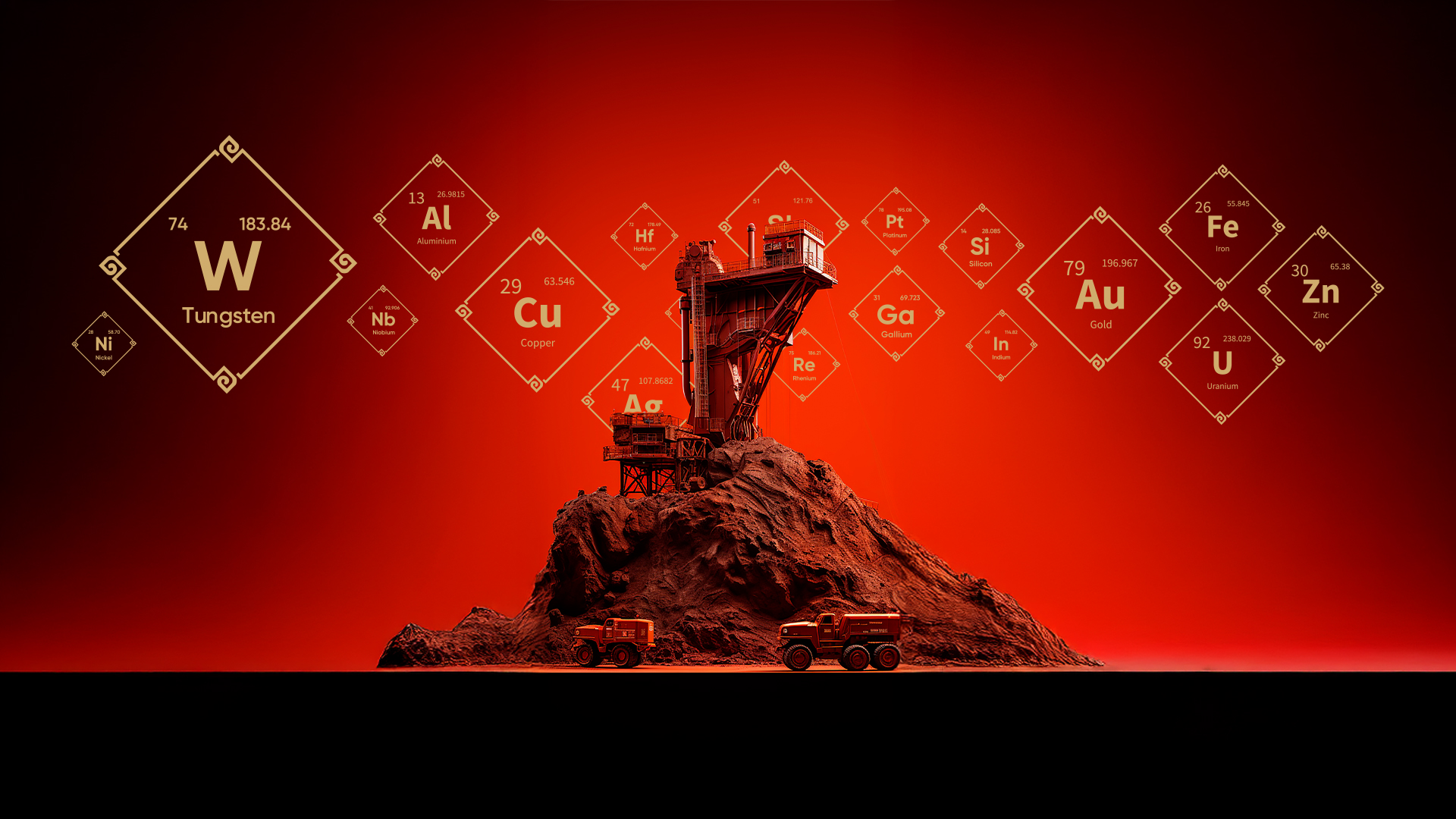
The Path to Global Leadership in Recycling. Kazakhstan has the fourth largest reserves of tungsten in the world. By 2026, the focus is shifting from mining to deep processing, supported by the opening of the first modern plant and successful capital raising through an IPO.
• The pressing question: Will the country be able to convert its reserves into real market power by creating an alternative supply chain "from mine to finished product", and what technological barriers to processing remain the main obstacles?
4

Circular Economy

Tailings recycling and rare metal extraction. Use of tax incentives to bring billions of tonnes of historical Mining waste into circulation. Case studies of valuable component extraction from technogenic raw materials.
• Pressing question: Is a tenfold tax reduction sufficient to mobilise 55 billion tons of tailings for processing to make waste processing more profitable than traditional mining?

Talent, Ecology, and
Society

1

Talent Shortage

Prestige of working professions and engineering elite. Discussion of the results of national initiatives supporting technical specialities. Analysis of talent shortages for highly automated production.
• Pressing question: Will salary increases attract young people to the MMC if the prestige of professions remains lower than in the IT sector?
2

Land Relations and Responsibility to Future Generations

Discussion of conflicts with landowners and blocking exploration territories. Analysis of international standards for land reclamation and social transformation of single-industry towns.
• Pressing question: Should the state forcibly expropriate land for strategic metal exploration needs, and will accumulated funds suffice for true ecological restoration decades down the line?
3

Mine Closure

Discussion of international standards for the reclamation of territories and the social transformation of single-industry towns after the depletion of deposits. Analysis of the reliability of mechanisms for accumulating funds in liquidation funds.
• An acute question: To what extent are the accumulated liquidation funds adequate for real land reclamation in decades, and will this financial burden fall on future generations?
4

Environmental Compliance: A Driver of Transformation or a Hidden Tax?

Discussion of the implementation of best available techniques (BAT) and mandatory environmental reporting. Analysis of the impact of international standards on access to capital and operating margins.
• An acute question: Is compliance with international environmental standards a real driver of technological transformation or is it just a new "business tax" that reduces the competitiveness of the national mining and metallurgical sector?